
Cyanotype Art
Creative chemistry, powered by sunlight.
Before photography lived on our phones, artists and scientists were already experimenting with ways to capture images using light.
Cyanotype is a photographic process dating back to the 1840s that uses UV light and iron-based chemistry to create brilliant blue prints. It was later used to reproduce technical drawings—which is where we get the term blueprint.
In this guided workshop, you’ll use the same basic process to create your own cyanotype artwork and watch sunlight turn a blank sheet of paper into something completely different.
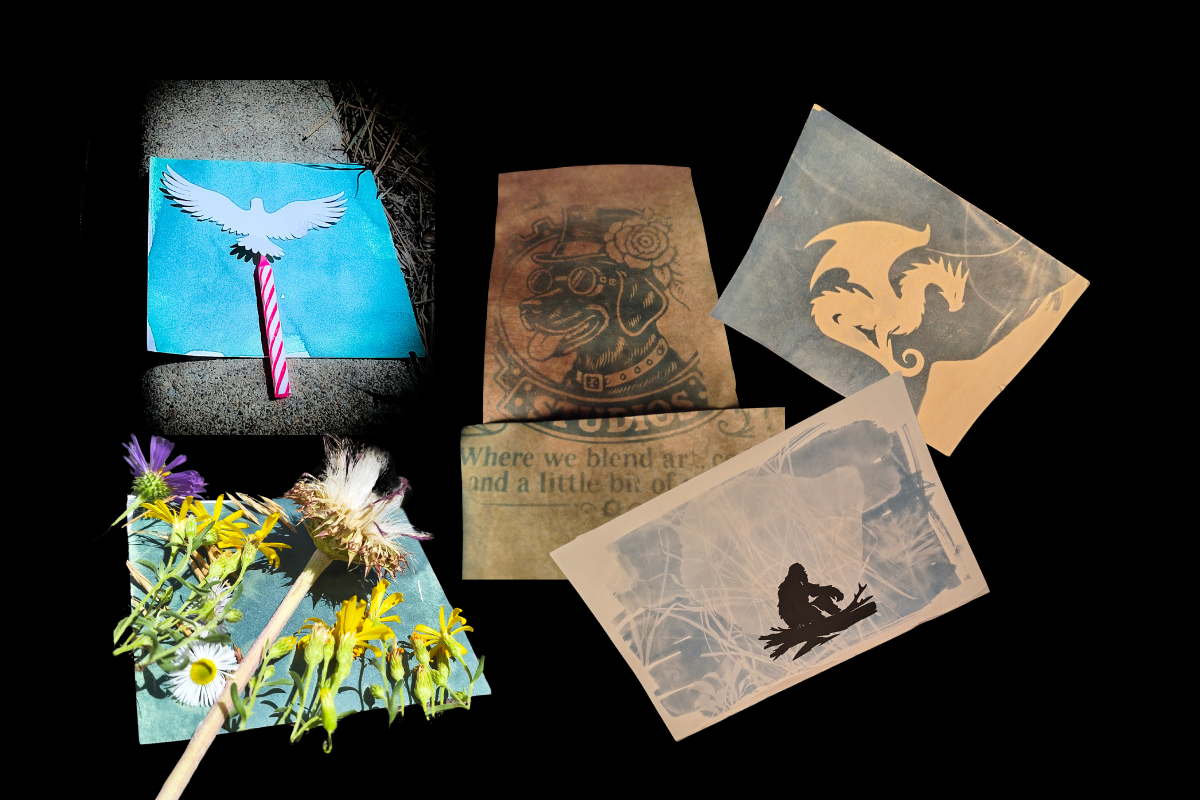
At a Glance
Difficulty: Beginner
Age Range: All Ages
Time: 60–90 minutes
Format: Guided Workshop
Adaptability: Adaptable for most abilities
Setting: Indoor or Outdoors
What Is Cyanotype?
Cyanotype is one of the earliest photographic printing processes, invented in 1842.
Instead of film or a camera, it uses paper coated with a light-sensitive, iron-based solution. Objects, plants, shapes, negatives, or other imagery are placed directly onto the prepared surface before it is exposed to UV or sunlight.
The uncovered areas react to the light while the protected areas remain relatively unchanged. Then comes the fun part: the print gets rinsed in water.
As it develops, the exposed areas transform into the rich Prussian blue cyanotype is famous for, leaving lighter silhouettes and details behind.
No darkroom required.
What You’ll Make
You’ll design and create your own cyanotype print using prepared light-sensitive materials and a selection of objects, shapes, natural materials, or imagery.
Experiment with:
overlapping objects
positive and negative space
transparency
texture
composition
exposure time
Every arrangement reacts with the light a little differently, which means no two prints come out exactly the same.
What to Expect
We’ll start with a quick look at the history and science behind cyanotype before jumping into the process ourselves.
You’ll arrange your design, expose it to UV light, rinse and develop the print, and watch the image emerge.
There’s plenty of room to rearrange, experiment, make weird choices, and see what happens.
No photography, chemistry, or art experience required.
Good to Know
Cyanotype needs UV light to develop, and sunlight works beautifully—but sunshine isn’t required. When outdoor conditions aren’t cooperating, we can use a UV light to expose the prints instead.
Exposure times vary depending on the light source, which gives us another chance to experiment with how the process works.
Great For
Families · Teens · Adults · Senior Groups · S.T.E.A.M. Programs · Community Groups · Private Parties
